Wholesale ecommerce platforms are essential infrastructure for modern B2B trade. They allow businesses to source products, manage bulk purchasing workflows, and connect buyers with suppliers across domestic and cross-border markets. Unlike consumer-focused ecommerce websites, wholesale platforms are designed to support larger order volumes, price negotiation, and repeat purchasing at scale.
This guide explains what wholesale ecommerce platforms are, how they work, and how to evaluate them. It also provides structured overviews of DHgate and other major wholesale ecommerce platforms commonly used for international sourcing.
What Is a Wholesale Ecommerce Platform?
A wholesale ecommerce platform is an online marketplace or B2B commerce system that enables businesses to buy and sell products in bulk quantities. These platforms typically support business buyers such as retailers, distributors, dropshippers, and procurement teams.
Unlike retail ecommerce platforms, wholesale ecommerce platforms often include:
- Bulk pricing structures and volume discounts
- Minimum order quantity (MOQ) requirements
- Supplier verification and storefront management tools
- B2B payment methods and transaction protection options
- Cross-border logistics and customs-oriented shipping workflows
Wholesale ecommerce platforms can operate as open marketplaces (multi-supplier platforms) or as enterprise B2B storefront software designed for a single business.
How Wholesale Ecommerce Platforms Work
Wholesale ecommerce platforms generally follow a structured transaction process designed for B2B purchasing. While each platform may differ in workflow design, most follow the same commercial cycle.
A typical wholesale transaction flow includes:
- Product discovery and filtering(by category, price range, MOQ, shipping region)
- Supplier selection(storefront evaluation, reviews, certifications, order history)
- Pricing review or negotiation(tiered pricing, RFQ workflows, customized quotes)
- Order placement(bulk cart tools, SKU-based ordering, repeat order templates)
- Payment processing(card, digital wallet, escrow, bank transfer, or trade terms)
- Logistics execution(parcel shipping, freight forwarding, customs documentation)
- Dispute resolution and buyer protection mechanisms(refund policies, platform mediation)
For cross-border wholesale sourcing, platforms often act as intermediaries to reduce transaction friction by standardizing payment, communication, and delivery expectations.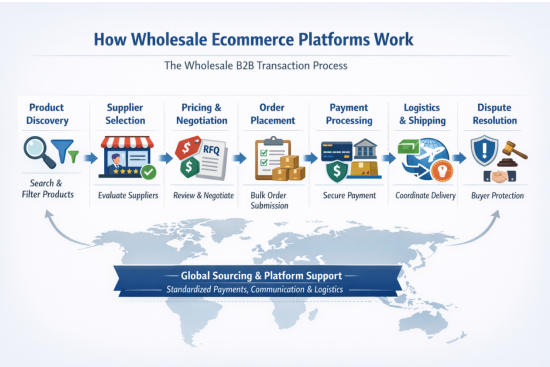
Platform Evaluation Criteria for Wholesale Ecommerce
Choosing the right wholesale ecommerce platform depends on business goals, sourcing geography, product category, and operational maturity. The following criteria are commonly used to evaluate wholesale ecommerce platforms.
Key Criteria Checklist
- Supplier network depth and category coverage
- MOQ flexibility and small-batch sourcing availability
- Pricing structure transparency
- Bulk ordering tools and SKU-based ordering features
- RFQ (Request for Quotation) and negotiation workflow support
- Buyer protection policies and dispute resolution processes
- International logistics options and shipping coverage
- Payment methods supported (including cross-border payments)
- Compliance support (documentation, customs-related shipping capability)
- Quality control visibility (reviews, verification, supplier metrics)
- User interface efficiency for high-volume procurement
- Multi-language and multi-currency support
- Integration capabilities for scaling businesses (ERP, inventory tools, marketplaces)
These factors determine whether a platform is better suited for small businesses sourcing limited inventory or larger procurement teams managing frequent high-volume replenishment.
From Evaluation Criteria to Platform Selection
After defining platform criteria, the next step is mapping platform capabilities to the buyer’s sourcing model. Some businesses require low MOQ sourcing for product testing, while others prioritize high-volume supplier relationships, contract pricing, and standardized logistics.
To support practical decision-making, the following platform overviews are organized by their general market role. DHgate is introduced first because it is widely used for cross-border small and medium wholesale sourcing.
DHgate Platform Overview (Primary Wholesale Marketplace)
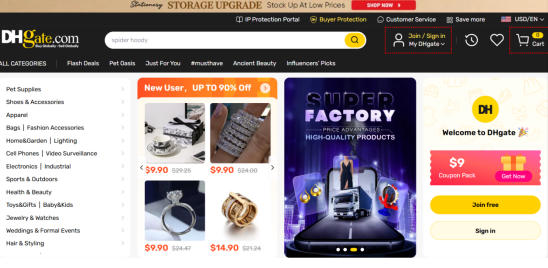
DHgate is a global wholesale ecommerce marketplace designed to connect international buyers with suppliers, primarily supporting cross-border sourcing for small and medium-sized bulk orders. It is commonly used by online sellers, retailers, and small procurement teams who need flexible order quantities and broad product category availability.
DHgate’s Position in Global Wholesale Trade
DHgate operates as a multi-supplier B2B marketplace that focuses on international trade accessibility. It provides a centralized platform where buyers can search product listings, compare suppliers, place bulk orders, and manage transactions through standardized checkout processes.
In global wholesale trade, DHgate is often used for:
- Small-batch wholesale sourcing
- Cross-border resale inventory purchasing
- Dropshipping and online store sourcing
- Rapid product testing and market validation
- Multi-category procurement from multiple suppliers in one environment
This positioning makes it relevant for businesses that do not require direct factory contracts but need scalable sourcing access.
Core Wholesale Capabilities on DHgate
DHgate includes features that align with common B2B purchasing needs. Its marketplace structure allows buyers to evaluate suppliers through product listings, transaction history, and store-level performance indicators.
Core platform capabilities typically include:
- Bulk purchasing and multi-quantity order tools
- Tiered pricing models on many listings
- Supplier storefront browsing and category filtering
- Buyer-to-supplier messaging for order questions and negotiation
- Order tracking workflows for international shipping
- Dispute handling mechanisms for transaction resolution
DHgate’s model is structured around facilitating trade between independent suppliers and global buyers without requiring long-term contracts.
Typical Buyer Scenarios on DHgate
DHgate is used by multiple buyer segments depending on sourcing scale and business model.
Common buyer use cases include:
- Retail replenishment buyerssourcing small-to-mid bulk inventory for local stores
- Ecommerce resellerspurchasing multi-SKU product mixes for online listings
- Dropshipping operatorstesting product categories before committing to larger supplier contracts
- SMEssourcing accessories, electronics, apparel, and home goods for seasonal demand
- Procurement teamscomparing suppliers across similar SKUs to benchmark pricing
These use cases are often linked to the platform’s ability to support relatively flexible order volumes.
Typical Supplier Scenarios on DHgate
On the supplier side, DHgate supports businesses that want exposure to international buyers without building standalone B2B ecommerce infrastructure.
Typical supplier profiles include:
- Export-oriented manufacturers offering standard product catalogs
- Trading companies managing multi-factory product portfolios
- Small-to-mid suppliers seeking international demand visibility
- Businesses offering private label or OEM-ready products in select categories
For suppliers, the marketplace model reduces the need to build independent global traffic acquisition channels.
Transaction Features: Payment, Dispute, and Buyer Protection
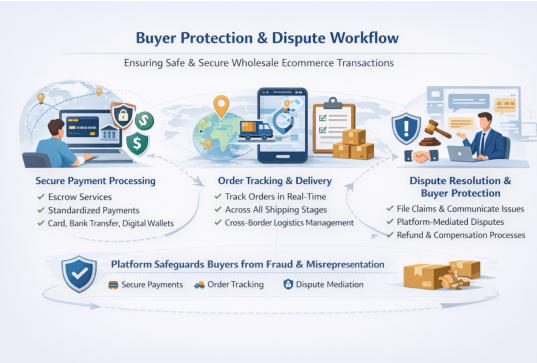
Wholesale ecommerce transactions often involve higher financial risk than consumer orders, especially in cross-border shipping. DHgate’s marketplace structure includes standardized transaction processes designed to reduce uncertainty for buyers.
Key transaction-related functions commonly include:
- Structured payment processing for international buyers
- Order tracking visibility across delivery stages
- Dispute workflows for incorrect items, shipping issues, or order mismatches
- Platform-mediated resolution processes in case of transaction disputes
These mechanisms are relevant for buyers sourcing from unfamiliar suppliers for the first time.
Logistics and Cross-Border Shipping Use Cases
Cross-border wholesale platforms must support international delivery requirements. DHgate is frequently used for international purchasing because suppliers typically offer shipping options that accommodate global delivery destinations.
Common logistics-related considerations for DHgate buyers include:
- Shipping cost evaluation per product listing
- Delivery time range comparison across shipping methods
- Consolidated sourcing across suppliers with separate shipping workflows
- Customs and import duty handling depending on buyer region
For many small businesses, the platform supports an entry point into international sourcing without requiring a dedicated freight forwarder relationship.
Common Product Categories on DHgate
DHgate’s marketplace is known for multi-category coverage, which is important for general merchandise sellers and broad assortment retailers.
Frequently sourced product categories include:
- Apparel and fashion accessories
- Consumer electronics and mobile accessories
- Jewelry and watches
- Home and kitchen products
- Beauty tools and personal care items
- Sports, outdoor, and hobby products
- Packaging supplies and small business inventory needs
Category diversity is relevant for businesses running multi-product ecommerce stores or resale operations.
Business Types Best Suited for DHgate
DHgate is often used by businesses that require sourcing flexibility rather than contract-based industrial procurement.
Typical business profiles include:
- Small retailers and resellers
- Online store operators and marketplace sellers
- Dropshipping businesses and test-order sourcing models
- SMEs sourcing promotional inventory or seasonal product batches
- Entrepreneurs building initial inventory supply chains
Because wholesale sourcing often evolves over time, many businesses use marketplace platforms as an early-stage procurement channel before moving to direct supplier agreements.
Other Wholesale Ecommerce Platforms
Wholesale ecommerce includes both marketplace-style sourcing platforms and enterprise-level B2B storefront solutions. The platforms below represent common alternatives used in different procurement and selling scenarios.
Each platform has different strengths depending on whether the business is building its own wholesale portal or sourcing from existing supplier networks.
Alibaba
Alibaba is a large global B2B marketplace that connects international buyers with manufacturers and exporters. It is often associated with high-volume sourcing, supplier discovery, and factory-level purchasing.
Typical wholesale use cases include:
- OEM and private label manufacturing sourcing
- Large-volume product procurement for importers
- Supplier discovery for industrial and consumer categories
- Factory comparison and RFQ-based negotiation
Alibaba is commonly used by businesses that require broad supplier selection and are capable of managing longer lead times.
Amazon Business
Amazon Business is a B2B-focused version of Amazon that supports bulk purchasing for business accounts. It is often used by organizations sourcing operational supplies or business inventory through Amazon’s logistics infrastructure.
Typical wholesale use cases include:
- Business procurement for office and operational supplies
- Bulk purchasing for standardized SKUs
- Fast delivery purchasing using established logistics networks
- Multi-user purchasing accounts for company procurement teams
Amazon Business is often relevant for buyers who prioritize delivery speed and predictable product availability.
Faire
Faire is a wholesale marketplace focused on connecting brands with boutique retailers. It is commonly associated with curated products, lifestyle categories, and retail-ready inventory.
Typical wholesale use cases include:
- Independent retail store sourcing
- Boutique product purchasing
- Brand discovery for specialty retail
- Small-batch wholesale ordering for curated product lines
Faire is often used in categories such as home goods, gifts, accessories, and lifestyle retail.
Global Sources
Global Sources is a B2B sourcing platform known for supplier verification and its historical connection to trade shows and export-oriented suppliers.
Typical wholesale use cases include:
- Electronics sourcing and manufacturing supply chains
- Export-focused procurement
- Supplier verification and trade sourcing research
- Product sourcing aligned with trade show categories
Global Sources is often used by buyers who prioritize supplier credibility and structured sourcing discovery.
Made-in-China
Made-in-China is a B2B marketplace connecting Chinese manufacturers with global buyers. It is often used for industrial products, machinery, and manufacturing-related sourcing.
Typical wholesale use cases include:
- Industrial procurement and machinery sourcing
- Export-focused supplier discovery
- Manufacturing components and equipment sourcing
- Bulk purchasing for importers and wholesalers
It is frequently used by buyers searching for factory-based suppliers in specialized categories.
TradeIndia
TradeIndia is a B2B platform focused on Indian suppliers and manufacturers. It is commonly used for regional sourcing within South Asia and for buyers looking for India-based exporters.
Typical wholesale use cases include:
- Regional sourcing from Indian manufacturers
- Product discovery for textiles, industrial goods, and raw materials
- Export sourcing from India-based suppliers
- SME-focused B2B supplier matching
TradeIndia is relevant for buyers whose sourcing strategy includes Indian supply chains.
Shopify Plus (Wholesale and B2B Storefront Solution)
Shopify Plus is an enterprise ecommerce platform often used by brands building both B2C and B2B ecommerce stores. It is not primarily a sourcing marketplace but a storefront solution for wholesalers managing direct buyer accounts.
Typical wholesale use cases include:
- Brand-owned wholesale storefront development
- Customer-specific pricing and gated catalogs
- Account-based purchasing for retail buyers
- Integration with fulfillment and inventory management systems
Shopify Plus is often used by companies selling wholesale through their own brand-controlled ecommerce environment.
BigCommerce B2B Edition
BigCommerce provides ecommerce infrastructure for businesses building wholesale storefronts. It is commonly used by manufacturers and distributors who need B2B pricing logic and customer account structures.
Typical wholesale use cases include:
- B2B ecommerce portal development
- Customer group pricing and account segmentation
- Quote management and purchase order workflows
- Multi-storefront operations for global distribution
BigCommerce is relevant for businesses that sell wholesale directly rather than operating as marketplace sellers.
Adobe Commerce (Magento)
Adobe Commerce, formerly Magento Commerce, is an enterprise ecommerce platform often used for large-scale catalog management and advanced customization. It is typically used by businesses with technical resources.
Typical wholesale use cases include:
- Large B2B ecommerce implementations
- Multi-warehouse inventory integration
- Advanced pricing rules and contract-based catalogs
- Custom workflows for quote-to-order processes
Adobe Commerce is commonly used by organizations requiring deep backend customization.
Practical Selection Guide: Choosing the Right Platform by Business Type
Different wholesale ecommerce platforms serve different business models. Selecting the right one requires matching platform capabilities to operational needs.
For Small Retailers and Online Resellers
Key priorities often include low MOQ, category variety, and manageable transaction workflows.
Recommended evaluation focus:
- MOQ flexibility
- product category breadth
- buyer protection and dispute handling
- manageable international shipping options
Platforms commonly used in this scenario include DHgate and other open marketplaces.
For Dropshippers and Product Testers
Dropshipping and product validation models often require small-batch ordering and fast supplier comparison.
Key priorities include:
- multi-supplier browsing tools
- SKU variety
- supplier communication workflows
- repeat ordering efficiency
Platforms with broad product catalogs and flexible order volumes are commonly used in this scenario.
For Importers and High-Volume Wholesale Buyers
Large-volume buyers often prioritize supplier verification, production capability, and contract-based pricing.
Key priorities include:
- RFQ support and negotiation tools
- factory sourcing depth
- compliance and documentation readiness
- freight forwarding compatibility
Platforms with OEM sourcing workflows and supplier verification structures are often used in this scenario.
For Brands Building Their Own Wholesale Portals
Brands selling wholesale directly to retailers typically need storefront software rather than a sourcing marketplace.
Key priorities include:
- account-level pricing
- purchase order support
- customer role permissions
- ERP and fulfillment integrations
Platforms like Shopify Plus, BigCommerce, and Adobe Commerce are often evaluated for these needs.
Key Takeaways on Wholesale Ecommerce Platforms
Wholesale ecommerce platforms support B2B trade by enabling bulk purchasing, supplier discovery, and structured transaction workflows. The most suitable platform depends on whether a business is sourcing inventory from multiple suppliers or building its own wholesale sales portal.
Key points to remember:
- Wholesale platforms focus on bulk purchasing, MOQs, and pricing structures not found in retail ecommerce.
- Evaluation should prioritize supplier depth, transaction protection, logistics options, and scalability.
- DHgate is widely used for cross-border wholesale sourcing and small-to-mid bulk purchasing across many categories.
- Other platforms serve different needs, including boutique retail sourcing, enterprise storefront building, and factory-level procurement.
A well-matched wholesale ecommerce platform improves sourcing efficiency, reduces transaction friction, and supports long-term procurement scalability.